
Beverages · Buyer's Guides · Drinks · Foodie Tips · Gluten Free
Are All Fruit Juices Gluten Free? Brand by Brand
11 February 2023
The short answer
Fruit juice is usually gluten free when it is pressed fruit and nothing else. Gluten arrives with what gets added: malt, barley malt vinegar, Worcestershire sauce, and glucose syrup made from wheat starch. Single-fruit juices are the safest bet, blends and savoury juices the least, and tomato juice is the one that catches people out.
This page pulls together what we had spread across eight separate juice articles: the answer for each juice, then a brand-by-brand table you can check against the bottle in your hand.
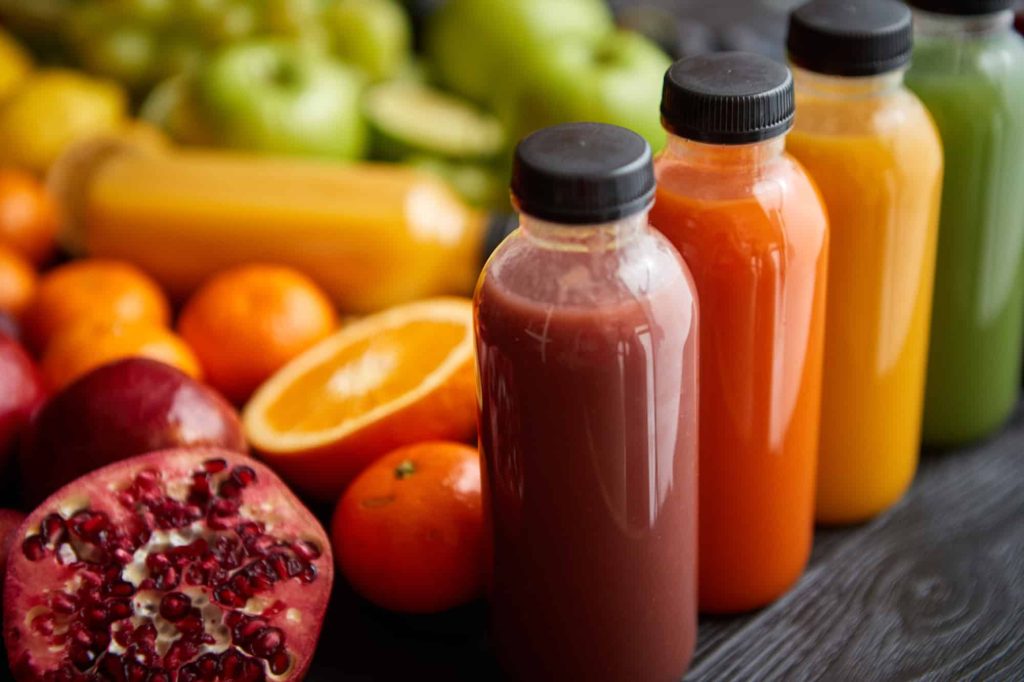
A caution before the table. This is a starting point, not a clearance. Recipes change, and formulations differ between countries, so a brand that is gluten free in the United States may not be in the UK or Australia. If you have coeliac disease, the label on the bottle in front of you beats anything on this page.
The Seven Juices at a Glance
MindShift Mentors · 7 nights freeSorted the food. The habit is the other half.Show me how it worksEvery juice below is gluten free in its pure form, because fruit does not contain gluten. What differs is how much gets added on the way to the bottle, and that is where the risk sits.
| Juice | Short answer | The thing to check |
|---|---|---|
| Apple juice and cider | Usually yes | Spiced and mulled ciders, which can carry malt or barley |
| Orange juice | Usually yes | Added flavourings in long-life cartons |
| Cranberry juice | Usually yes on its own | Blends such as cranapple, and anything premixed with alcohol |
| Pineapple juice | Usually yes | Juice blends rather than 100 per cent pineapple |
| Lemon juice | Usually yes | Sulphites, which are gluten free but are a separate allergy |
| Lime juice | Usually yes | Sweetened cordials and powdered mixes, for glucose syrup |
| Tomato juice | Depends on the brand | Worcestershire sauce and malt vinegar, which do contain gluten |
Tomato juice is the odd one out, and it is worth saying plainly: it is the only juice on this list where a mainstream supermarket product routinely contains gluten.
Gluten-Free Juice Brands, Brand by Brand
These are the makers' own positions, taken from their labelling and their websites. "Not stated" means exactly that: the product is probably fine, but the manufacturer has not committed to it, so it is not a guarantee.
| Juice | Brand | Status | What the maker says |
|---|---|---|---|
| Apple | Mott's | Gluten free | Mott's Sensibles apple juice is listed gluten free on their site |
| Apple | Martinelli's | Gluten free | Their FAQ says all products, cider included, are gluten free |
| Apple | Juicy Juice | Gluten free | No wheat, barley, rye or oats in their juices |
| Apple | Minute Maid | Gluten free | All 100 per cent juice products with nothing added |
| Apple | Tropicana | Not stated | No gluten-free label and nothing on their site |
| Apple | Allen's | Not stated | No label and no statement on their site |
| Apple | Great Value | Not stated | No label on the 100 per cent apple juice |
| Orange | Tropicana | Gluten free | Reported gluten free, though not labelled as such |
| Orange | Simply | Gluten free | Their pure orange juices, including medium pulp with calcium |
| Orange | Minute Maid | Gluten free | All 100 per cent juice products with nothing added |
| Orange | Aldi Nature's Nectar | Gluten free | Listed gluten free |
| Orange | Dole | Gluten free | A Celiac Disease Foundation sponsor since 2014 |
| Orange | Florida Natural | Not stated | No label and nothing on their site |
| Orange | Kirkland | Not stated | Not from concentrate, but no gluten statement |
| Cranberry | Minute Maid | Gluten free | All 100 per cent juice products with nothing added |
| Cranberry | Ocean Spray | Not stated | Some lines are listed gluten free, the cranberry juices are not addressed |
| Cranberry | Simply Cranberry | Not stated | Nothing on the packaging or the site |
| Cranberry | Cranapple and other blends | Check the label | A blend means more ingredients, so the single-juice answer does not carry over |
| Pineapple | Libby's | Gluten free | A gluten-free icon on the 100 per cent juice packaging |
| Pineapple | Dole | Gluten free | Widely reported gluten free, though not on their own site |
| Pineapple | Minute Maid | Check the label | Sold as a pineapple and orange blend, so contact them on that one |
| Pineapple | Tropicana | Check the label | A representative has said their products are naturally gluten free, but pineapple is sold as a blend |
| Pineapple | Golden Circle | Not stated | Australian brand, no gluten statement |
| Pineapple | Del Monte | Not stated | No label on the juice |
| Pineapple | Great Value | Not stated | No label on the 100 per cent juice |
| Lemon | RealLemon | Not stated | No label and nothing on their site |
| Lemon | Concord Foods | Not stated | No label and nothing on their site |
| Lemon | Italia | Not stated | No label and nothing on their site |
| Lemon | Great Value | Not stated | No label on the juice from concentrate |
| Lemon | Kroger | Not stated | No label on the 100 per cent lemon juice |
| Lime | Rose's Lime Cordial | Reported gluten free | No label on the bottle, and Coca-Cola does not address it |
| Lime | Real Lime | Not stated | No label and nothing on their site |
| Lime | Concord | Not stated | No label and nothing on their site |
| Lime | Finest Call | Not stated | No label and nothing on their site |
| Tomato | Campbell's | Gluten free | Labelled gluten free on the bottle and stated on their site |
| Tomato | Red Gold | Gluten free | Labelled gluten free and listed as such on their site |
| Tomato | Great Value | Gluten free | No label on the bottle, but Walmart lists it gluten free |
| Tomato | V8 | Gluten free | A gluten-free label on the packaging, not repeated on their site |
| Tomato | Heinz | Not stated | No label and no statement |
| Tomato | Clamato | Not stated | No label on the tomato cocktail and nothing on their site |
| Tomato | Big Tom | Contains gluten | Lists malt vinegar from barley, and Worcestershire sauce. Avoid. |
Where Gluten Actually Gets Into Juice
Fruit has no gluten in it. Everything below is something a manufacturer added or something the juice met on the way to the bottle.
- Malt and malt vinegar. Both come from barley. Malt vinegar turns up in savoury juices and tomato cocktails, and it is the single most common reason a juice is not gluten free.
- Worcestershire sauce. Common in tomato juice and Bloody Mary mixes. Some versions are brewed with barley malt vinegar.
- Glucose syrup. Usually fine, but it can be made from wheat starch, which is why it appears on some avoid lists and not others. It shows up in sweetened cordials and powdered drink mixes.
- Blends. A single-fruit juice has one thing in it. The moment it becomes cranapple, or a tropical blend, the answer for the headline fruit stops applying.
- Shared production lines. Rare for juice, but the phrase to look for is "produced in a facility that also processes wheat".
- Added alcohol. Premixed juice cocktails can carry barley-based spirits or beer, neither of which is gluten free.
Two things that sound alarming and are not: sulphites and sodium benzoate. Sodium benzoate, sodium metabisulfite and sodium sulphite are all gluten free, and they are common in lemon and lime juice as preservatives. Sulphites are a separate allergy in their own right, so they matter if you react to them, but they are not a gluten question.
Remember too that "wheat free" is not the same claim as "gluten free". Gluten also comes from rye, barley, malt and, through shared processing, oats.
Does From Concentrate Make a Difference?
Slightly, and it is worth understanding why rather than avoiding concentrate on principle.
Pure juice, sometimes sold as "not from concentrate", is pressed, pasteurised and bottled. Juice from concentrate has had its water removed for shipping, then added back at the other end along with whatever else the recipe calls for. More steps and more added ingredients means more chances for something with gluten to join, which is the whole of the difference. It does not make concentrate unsafe, and plenty of concentrate juices are labelled gluten free.
Powdered juice is dehydrated concentrate, and it almost always includes a sweetener, so it is the one type where reading the ingredients matters most.
On the labels themselves: in the United States, the FDA lets a product be called gluten free if it holds under 20 parts per million, and no manufacturer is obliged to use the label at all. That is why so many rows above read "not stated". In the EU, gluten free is also under 20 mg/kg, with a separate "very low gluten" tier under 100 mg/kg, and gluten-containing ingredients must be declared.
Is Apple Cider Gluten Free?
Plain apple cider, meaning the cloudy unfiltered juice rather than the alcoholic drink, is gluten free on the same terms as apple juice: it is pressed apples. Martinelli's states this outright for their cider.
Two things change the answer. Spiced or mulled ciders carry added flavourings, and hard cider is a fermented drink where the brewing process can involve barley. If the bottle is alcoholic, treat it as a separate question from the juice.
What About Bloody Marys and Tomato Juice Cocktails?
This is where the most care is needed. A Bloody Mary or Bloody Caesar is tomato juice plus Worcestershire sauce, plus spices, plus vodka, and two of those four can carry gluten.
Made at home, you control it: use a tomato juice from the gluten-free rows above, check the Worcestershire sauce, and the rest follows. Bought ready-mixed, look for the label, because Big Tom in the table above is a real example of a mainstream tomato juice that lists barley malt vinegar in its ingredients.
Frequently Asked Questions
Is apple juice gluten free?
Apple juice is usually gluten free, because it is pressed apples. Mott's, Martinelli's, Juicy Juice and Minute Maid all state their apple juices are gluten free. The exceptions are spiced or mulled products and anything alcoholic.
Is orange juice gluten free?
Orange juice is usually gluten free. Tropicana, Simply, Minute Maid, Aldi's Nature's Nectar and Dole are all reported or stated gluten free. Florida Natural and Kirkland do not make the claim, which is not the same as failing it.
Is cranberry juice gluten free?
Plain cranberry juice is usually gluten free. Blends are the catch: cranapple and similar mixes bring in a second juice with its own ingredient list. Ocean Spray lists some product lines as gluten free but does not address its cranberry juices, so contact them if you need certainty.
Is tomato juice gluten free?
It depends on the brand, and tomato juice is the one juice where that answer is genuinely mixed. Campbell's, Red Gold, V8 and Walmart's Great Value are gluten free. Big Tom contains barley malt vinegar and Worcestershire sauce, so it is not.
Is lemon juice gluten free?
Lemon juice is generally gluten free, including bottled juice from concentrate. None of the main brands carry a gluten-free label, which reflects how unlikely the problem is rather than any doubt about it. The sulphites you will see on the ingredients list are gluten free.
Is lime juice gluten free?
Lime juice is generally gluten free when it is pressed limes. Sweetened cordials and powdered lime products are the ones to read, because glucose syrup can be made from wheat starch. Key lime juice is gluten free on the same terms as ordinary lime.
Is pineapple juice gluten free?
Pineapple juice is usually gluten free. Libby's carries a gluten-free icon and Dole is widely reported gluten free. Watch for blends: Minute Maid and Tropicana sell pineapple as part of a mixed juice rather than on its own.
Does a juice need a gluten-free label to be safe?
No. Manufacturers are not required to carry the label, and certifying a product takes work many juice makers do not bother with for something that was never likely to contain gluten. The absence of a label means the maker has not committed either way. Read the ingredients, and if a suspect one is there, contact the manufacturer.
What ingredients should I look for on a juice label?
Malt, malt vinegar, barley, rye, wheat, wheat starch, Worcestershire sauce and glucose syrup. Also look for the phrase "produced in a facility that also processes wheat". If none of those appear and the juice is a single fruit, you are almost certainly fine.
Once you are past juice, the same reading habit covers the rest of the shop. Our gluten-free guide runs the same brand-by-brand check across 25 more foods, and the gut health hub covers what to do when a food agrees with the label but not with you.